
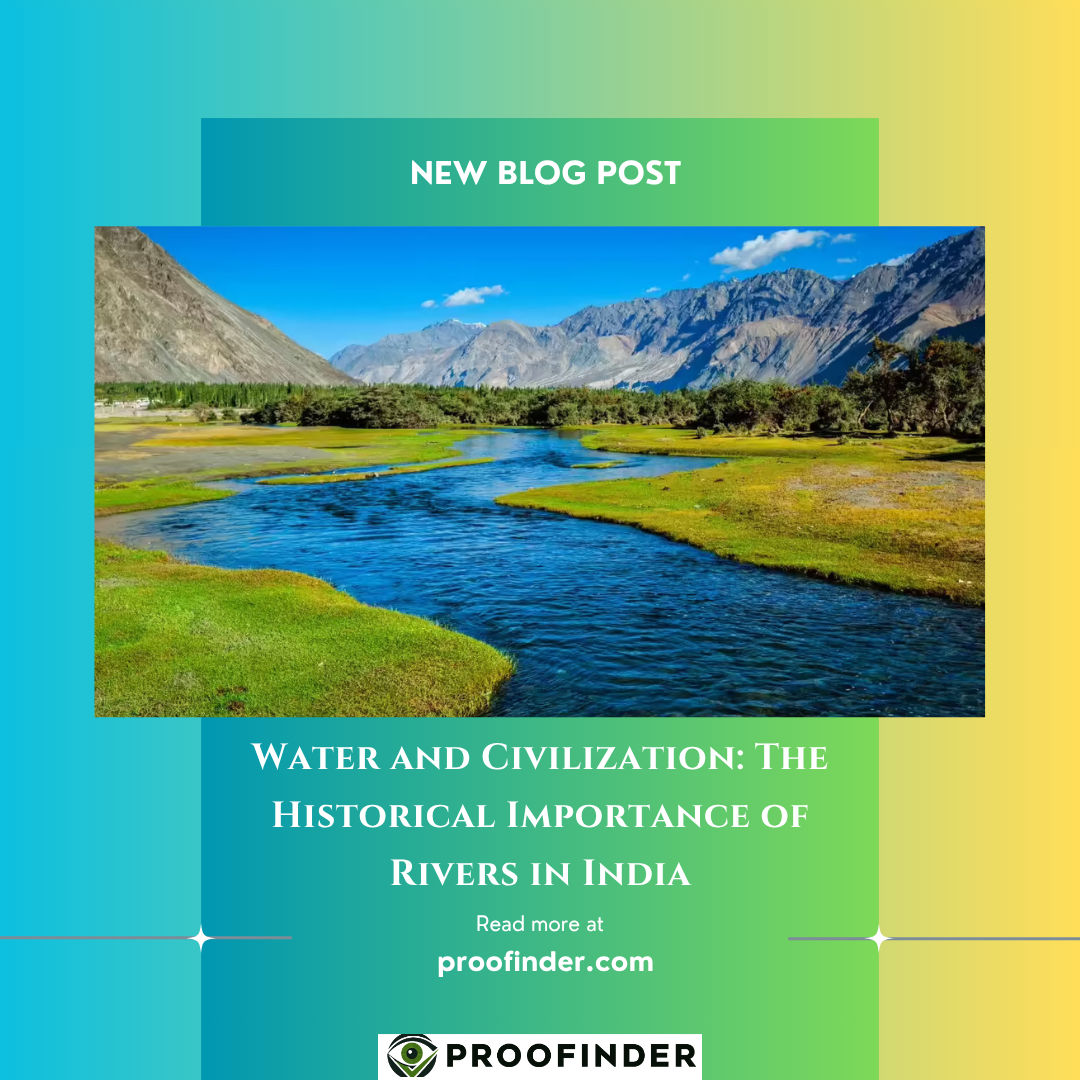
Water and Civilization: The Historical Importance of Riversin India
For millennia India’s great rivers have nurtured its civilization. The Indus Valley on the Sindhu first saw advanced urban centers and irrigation-based farming. The Ganges (Ganga) became a spiritual heartland – a living goddess whose sacred waters unite people across regions.
These rivers enabled trade, fertile agriculture and wealth that underpinned empires from the Mauryas to the Mughals. Today the rivers remain vital to hundreds of millions (40% of India’s population and GDP lie in the Ganga basin) even as modern pollution, dams and climate change threaten their health and legacy.
India’s rivers are more than waterways – they shaped history, culture, and economy. Mention the comparative importance of Indus, Ganges and other major rivers. Define scope (all-India, ancient to present). Possibly cite the idea that rivers were cradles of early civilization.
The Indus River and the Rise of Ancient Urban Centers
Early civilization: India’s first large-scale civilization (the Harappan or Indus Valley Civilization, c. 2600–1900 BCE) was centered on the Indus and its tributaries Intensive irrigated agriculture (modelled on Mesopotamian techniques) along the fertile plains supported large cities . Harappa and Mohenjo-daro (each ~30–40,000 people had sophisticated water infrastructure granaries, brick drains and the famous Great Bath) implying ritual and civic use of river water.
Trade and unity: Uniform weights and measures across the Indus cities imply political integration, and extensive trade networks reached far beyond – even “Harappan colonies” in Mesopotamia and Badakhshan are suggested by archaeologists. Thus the Indus River was an early economic lifeline: it spread silt and moisture, enabling wheat and barley farming, and its basin (stretching ~900 miles along the river) supported an estimated 5 million people at its height.
Example: The Great Bath of Mohenjo-daro (built ~2500 BCE) is an archaeological highlight. This large, watertight public pool may have been used for ritual bathing or ceremonies, underscoring the spiritual and practical centrality of water in the Indus cities.
The Ganges: Sacred Waters and Cultural Unity
Spiritual role: The Ganges is India’s most sacred river, worshipped as the goddess Ganga. All along its 2,510 km Indian course draining 1/3 of the country, Hindus bathe for purification, carry Ganga-jal (water) for rituals, and perform aarti ceremonies at riverside temples. Bathing in the Ganga is believed to wash away sins, especially at holy tirthas (pilgrimage sites) like Haridwar, Varanasi, and the Triveni Sangam at Prayagraj. Even secular figures recognize its centrality – Nehru called the Ganga “the river of India, beloved of her people... symbol of India’s age- long culture and civilization”.
Cultural unity: By drawing pilgrims from across India, the Ganges has fostered a shared cultural identity. Iconic gatherings like the Kumbh Mela (held every 12 years at confluences of the Ganges) illustrate its unifying power: tens of millions converge to bathe in Ganga’s waters. Local rivers are often dubbed “the Ganges of the South” (e.g. the Godavari) to signify their sacredness.
Example: Each year, Hindu devotees throng the ghats of Varanasi on the Ganges for the Ganga Aarti ritual at sunset. The flaming lamps and chants on the riverbank dramatize the Ganga’s spiritual role in daily life and mark life’s passage – many Hindus have their ashes scattered here after death.
Rivers as Trade Routes and Economic Lifelines
Agriculture and economy: India’s great rivers created the rich Indo-Gangetic and Indus floodplains that became the subcontinent’s breadbaskets. The Ganga– Brahmaputra basin covers ~25% of India’s area but houses 40% of its population, producing over 40% of national GDP. The silt-laden waters sustain rice, wheat and cash crops. Even in ancient times, river valleys (the Indus, Ganges, Brahmaputra) enabled surplus farming that fed cities and armies.
Navigation and trade: Waterways facilitated commerce. In British India the Ganges Canal (completed 1854) and steamer services opened up inland trade from the Bay of Bengal into the North. The Brahmaputra allowed transport of Assam’s tea and oil to ports. Historically, the Indus connected the subcontinent to Central Asia and the Arabian Sea, while coastal rivers (Godavari, Krishna) linked southern kingdoms by boat. Historic records note that Himalayan rivers like the Sutlej and Beas were tapped with canals for irrigation, enhancing agricultural output.
Economic lifeline: Today, hundreds of millions depend on river water for drinking, irrigation and industry. The UNEP notes that the Ganga alone is an “economic lifeline for more than 500 million people”. Hydropower dams (e.g. Bhakra on the Sutlej, Tehri on the Bhagirathi) also draw river water for electricity and irrigation.
Example: The 19th-century Ganges Canal is a notable project: at its time it was one of the world’s largest irrigation schemes, bringing perennial water to Punjab and Uttar Pradesh fields and boosting colonial agricultural revenues. Likewise, British river steamers (from Kolkata up the Ganges) were famous in 1800s India, underscoring rivers’ role in commerce.
River Valleys and the Expansion of Kingdoms
Imperial capitals: Many of India’s great empires built their seats on rivers. The Mauryan capital Pataliputra (modern Patna) sat at the confluence of the Ganga and Gandak, while the Gupta empire (c.4th–6th CE) was centered in the Ganges heartland. In the north, the Delhi Sultanate and Mughal Empire established their capitals (Delhi, Agra) along the Yamuna. This was no accident: river valleys provided defense, food and transport.
Regional powers: River valleys also nurtured regional kingdoms. For example, Assam’s medieval Ahom Kingdom (1228–1826 CE) flourished along the Brahmaputra, commanding riverine trade and rice agriculture. In the south, kingdoms around rivers like the Kaveri or Godavari grew wealthy (though outside our main focus area). The riverine terrain shaped each polity’s culture and boundaries.
Culture and defense: Rivers could be sacred boundary markers too. Control of river crossings (fords, ferries, ports) was strategic; dynasties often built ghat fortifications and capitals in floodplains. Rhythms of flooding and irrigation cycles even structured the agrarian revenue base of empires.
Example: Emperor Ashoka (Maurya, 3rd century BCE) erected pillars and edicts along major routes in the Ganges valley. His empire’s wealth was rooted in fertile Ganges rice fields. Centuries later, Akbar chose the Yamuna’s banks at Fatehpur Sikri for his capital palace, exploiting the river for water supply and symbolism of power.
Challenges and Preservation in Modern India
Pollution crisis: Ironically, India’s sacred rivers are now “indescribably polluted”. The Yamuna through Delhi is “virtually black”, and at times Ganga pollution exceeds safe limits by 100×. Industrial effluent, untreated sewage and religious offerings all threaten water quality. Fish and even river dolphins have suffered; locals report dramatic foaming and toxicity.
Restoration efforts: In response, the government launched major clean-up programs. The Ganga Action Plan (from 1985) and the modern Namami Gange mission (from 2014) aim to build sewage treatment, prevent waste dumping, and restore riverfront forests. UNEP highlights early success: dolphin sightings are rebounding in cleaner stretches. Similar projects (e.g. the Yamuna Action Plan) attempt to address Delhi’s crisis.
Water management: Beyond pollution, dam-building and water diversion have provoked controversy. Projects like the Tehri Dam (Ganga source tributary) and proposals for interlinking rivers spark debates on ecology and displacement. Transboundary issues also loom: the 1960 Indus Waters Treaty (India-Pakistan) governs the Indus, while India–China tensions have risen over dams on tributaries of the Brahmaputra.
Climate and sustainability: Glacial melt in the Himalayas (feeding Ganga, Brahmaputra, Indus) is a looming threat. Monsoon changes and flood-control embankments alter river courses. Conservationists note that in Hindu belief a river’s dharma is to flow, yet human actions have “violated their own dharma” toward rivers. Local movements (e.g. the Narmada Bachao Andolan on another river) exemplify civil-society efforts to protect river ecosystems.
Example: Namami Gange: launched in 2014, this US$4 billion+ program targets cleaner Ganga water through 337 sewage treatment plants and waste interception networks. Government reports claim it handles some 5 billion liters of wastewater per day, aiming to make sacred bathing sites like Varanasi and Haridwar safe for devotees again.
“The story of civilization begins with water.”