
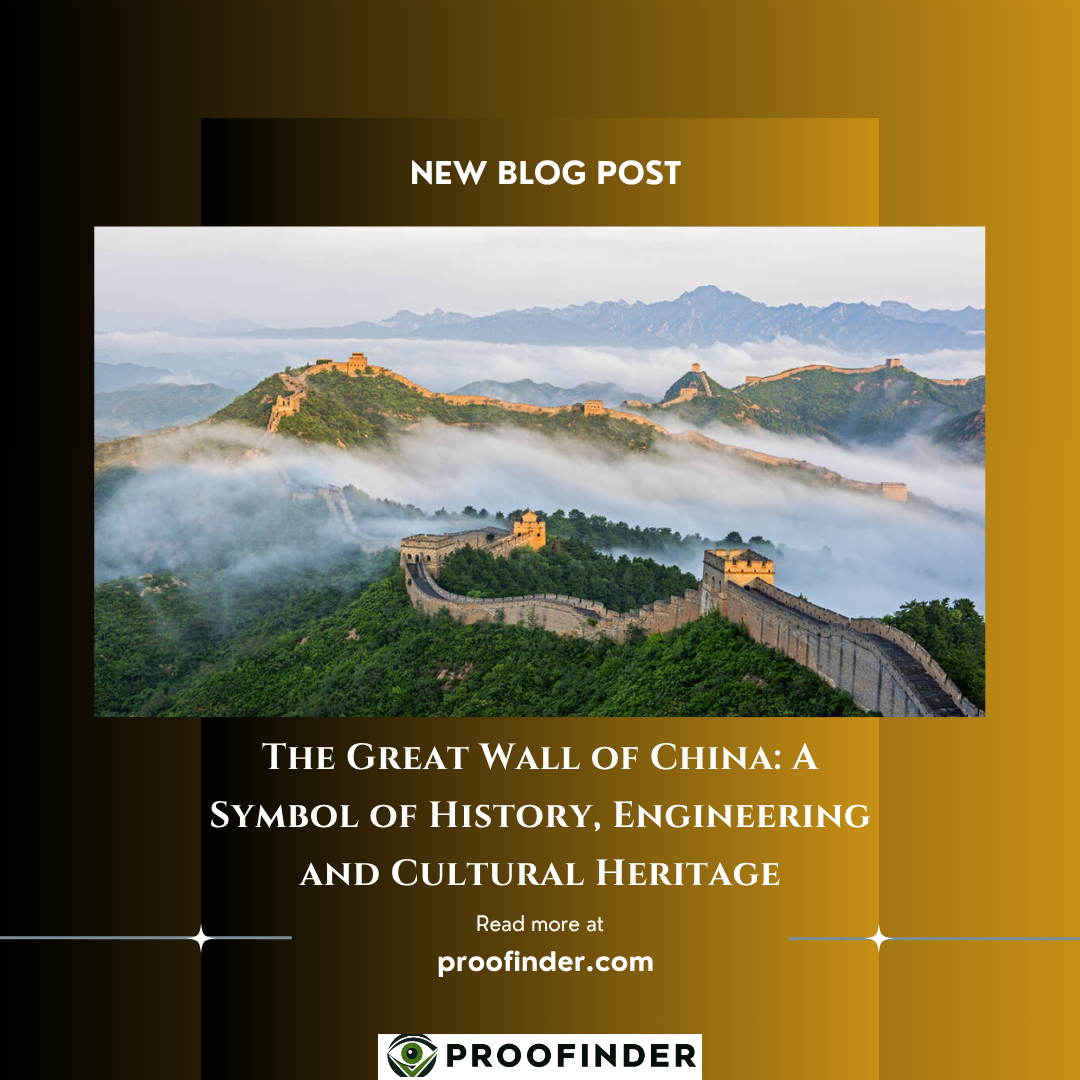
The Great Wall of China: A Symbol of History, Engineering and Cultural Heritage
Stretching over 20,000 kilometers and built across centuries, the Great Wall of China is an unparalleled feat of ancient engineering and a profound symbol of Chinese civilization. Its origins date back to early border fortifications in the 8th–5th centuries BC, and it was first unified into a single defense system under Emperor Qin Shi Huang in 221–206 BC.
The wall as seen today largely reflects massive Ming dynasty construction (1368–1644 AD), which rebuilt much of the earlier works in stone and brick. Today the Wall is both a UNESCO World Heritage site (inscribed 1987) and a major cultural monument. Its design, historical significance, and tourism impact make it a lasting emblem of China’s past and present.
The Great Wall of China is among the largest construction projects ever undertaken. It spans China’s northern border from Shanhaiguan in Hebei to Jiayuguan in Gansu province, with a total length exceeding 20,000 km. Contrary to the common myth, the wall is not a single continuous line but a series of walls and fortifications built by successive states and dynasties over two millennia.
Early walls appeared during the Spring and Autumn and Warring States periods (771–221 BC) as regional defenses. These were later connected and expanded by Emperor Qin Shi Huang (221–206 BC) to create the first unified “10,000-Li” Wall. While parts of Qin’s wall fell into disrepair after his death, major fortification efforts resumed under later dynasties (notably the Han and especially the Ming), reflecting changing military needs. The Wall today is celebrated not only as an engineering marvel but also as a cultural icon and UNESCO World Heritage site.
Early Walls and Qin Unification
Long before the Ming-built wall became famous, China’s northern frontier was dotted with fortifications. From the 7th century BC onward, several feudal states (such as Qi, Yan, Zhao, and Chu) erected earth-and-wood walls along their borders. These walls were localized defenses against nomadic raids or rival states. In 221 BC, after conquering the other kingdoms, Qin Shi Huang ordered the removal of redundant barriers and the linking of key sections into one continuous defense line. General Meng Tian oversaw this massive Qin project, connecting thousands of kilometers of rammed-earth walls and watchtowers. By around 212 BC, this “10,000-Li Long Wall” stretched from Gansu province in the west all the way to the Bohai Sea in the east. Although Qin’s dynasty quickly fell, this initial unification set a template: the Great Wall was continuously built from the 3rd century BC to the 17th century AD, serving as the great defense project of successive Chinese empires.
Ming Dynasty – Engineering Marvel
The most famous portions of the Great Wall were erected under the Ming dynasty (1368– 1644 AD). After the Mongol-led Yuan dynasty (1271–1368) fell, the Ming emperors prioritized northern defense and rebuilt dilapidated walls using advanced engineering. They often replaced loose earth with fired bricks, cut stone, and mortar to create a sturdier fortification. This Ming Wall is the Great Wall of the Ming, as UNESCO and scholars call it, and it represents “the highest achievement in the construction of China’s ancient military defense system”. Ming engineers took advantage of rugged terrain, constructing walls along mountain ridges and gorges. Watchtowers, beacon towers, and garrison stations were spaced at regular intervals to facilitate communication and troop movement. For example, at Badaling (near Beijing) the wall reaches heights of 8–10 meters and is wide enough for several soldiers abreast. In total, the Ming wall stretches some 8,850 km from Liaoning to Gansu (85% of the continuously surveyed wall). Modern investigations have even located formerly unknown branches of earlier walls, but the Ming sections remain the most intact and emblematic today.
Symbolism and Cultural Legacy
Beyond its military function, the Great Wall became a powerful national symbol. UNESCO notes that the Wall “reflects collision and exchanges between agricultural civilizations and nomadic civilizations”. It provides enduring evidence of the strategic thinking and engineering skill of ancient Chinese states. Perhaps most importantly, the Wall embodies China’s cultural identity and resilience. It “has incomparable symbolic significance”: built to protect China from outside aggression and to preserve its culture, it lives on in literature, poetry, and national mythology.
The Wall is frequently called the “Chinese Wall” and has been celebrated in works ranging from ancient poems to modern novels. In contemporary times, it stands as “a cultural monument and the largest architectural structure ever built by humankind”. The very phrase “climbing the Great Wall” has come to mean overcoming hardships, reflecting how deeply the Wall is woven into Chinese heritage.
Tourism, UNESCO, and Conservation
Today, the Great Wall is one of China’s top tourist attractions and a UNESCO World Heritage site (inscribed in 1987). Millions visit each year, with the most popular section, Badaling near Beijing, alone receiving over 10 million visitors since its development as a scenic area. The Wall’s immense scale presents unique conservation challenges: sections have been damaged over time by erosion, agriculture, and inappropriate construction. In response, Chinese authorities have enacted protective laws and management plans.
For example, a 2006 Regulations on the Protection of the Great Wall and successive conservation plans provide a comprehensive framework for preservation. International organizations like UNESCO and the World Monuments Fund have also supported restoration projects (e.g. pilot conservation at Huanghuacheng) and training in traditional masonry techniques. Despite these efforts, balancing tourism and preservation remains difficult. Foot traffic, nearby development, and vandalism continue to threaten the Wall’s integrity. As UNESCO notes, the Wall’s authenticity and setting are vulnerable to uncontrolled development, underscoring the need for “systematic, scientific” management of this trans-provincial heritage.
“The strongest legacies are built to endure.”