
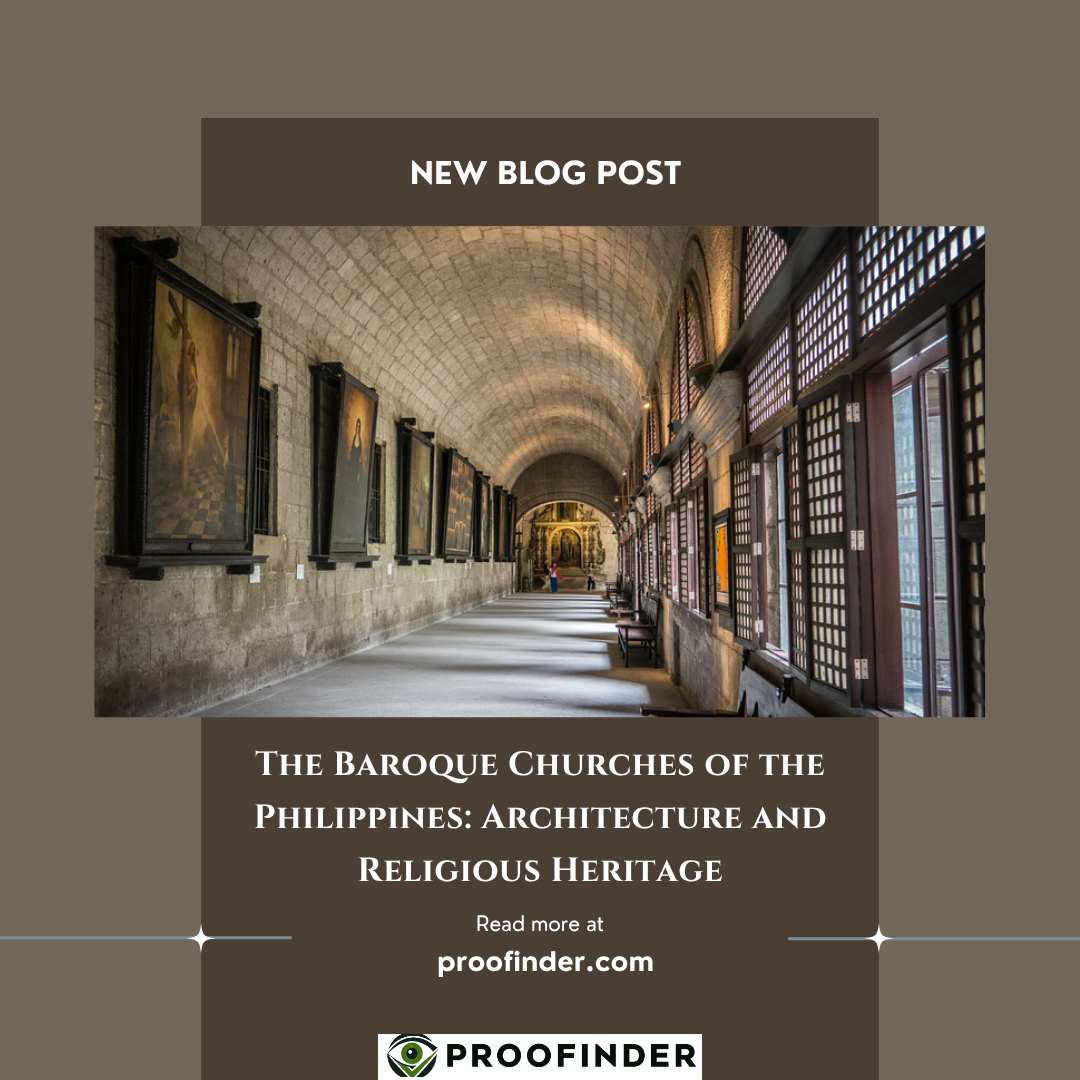
The Baroque Churches of the Philippines: Architecture and Religious Heritage
At first glance, the Philippines’ UNESCO-listed Baroque churches look like transplanted European cathedrals – but their story is one of fusion. “These four churches… are representative of a unique architectural style where European Baroque was reinterpreted by Philippine and Chinese craftsmen,” notes UNESCO. In other words, Filipino builders inherited Spanish Baroque forms but adapted them with local materials, motifs and engineering. The result is a distinct “Philippine Baroque”: massive, squat churches built of coral and volcanic stone, with thick adobe walls and enormous buttresses to resist typhoons and earthquakes. Their ornament – carved wood, intricate retablos and sculpted façades – incorporates tropical flora (papaya, coconut palms, ferns) and indigenous figures.
This architectural heritage grew out of the Spanish colonial era (16th–18th centuries). Augustinian and other friars arrived in 1565 and soon began building stone churches to establish Christianity. The first, San Agustín Church in Manila (constructed 1571–1607), set the pattern. For later churches, local conditions demanded changes. Frequent earthquakes (the “Philippines being prone to seismic activities”) and occasional raids meant that churches were built more like fortresses – “squat, monumental and massive” as UNESCO puts it. The Laws of the Indies even prescribed planning codes, ensuring these churches fit into town layouts.
Crucially, Filipino and Chinese artisans executed most of the work. As one scholar notes, “Filipino and Chinese artisans executed most of the masonry and woodcarving”. These craftsmen, guided by Spanish friars or architects, interpreted Baroque design through a tropical lens. The fusion of East and West – Chinese kiln techniques, Filipino carving traditions – gave Philippine Baroque its own identity.
Architectural Features and Local Adaptations
The overall form of Philippine Baroque churches is immediately distinctive. All four UNESCO churches share a “squat, monumental and massive” silhouette. Thick adobe walls (often 3–4 meters at the base) give them bulk; wide buttresses (called contrafuertes) reinforce the walls on the exterior. These buttresses often end in Baroque scrolls or finials, as at Paoay. San Agustín Church (Paoay) has 14 buttresses along each side and back of the nave, clearly visible in its façade profile. (Refer to Figure below.) The effect is fortress-like: these churches could shelter townsfolk during bandit raids or attacks.
The fenestration and towers also adapt to risk. Bell towers at these churches are often massive and at times detached from the main nave. For instance, Paoay’s octagonal bell tower stands apart, so that a quake would not topple it onto the church. By contrast, San Agustín (Manila) and Miag-ao have attached towers, but these too were built low and sturdy. Windows are small and set high, reducing structural weakness. Roofs are double-pitched and steep, allowing rainwater to run off swiftly.
Materials and Construction. The choice of material was regional. In Luzon (especially Ilocos), builders often used coral limestone and bricks. In the Visayas, volcanic sandstone and coral stone were common. For example, Miag-ao Church’s façade is hewn from pale volcanic sandstone; its crisp carvings have held up over centuries. All churches used local hardwoods for beams and elaborate interiors. Walls were coated in lime plaster and painted – usually a warm ochre or white – which both brightened interiors and protected the masonry.
Ornamentation. Baroque exuberance is evident in the details, but infused with local imagery. The main entrances (portals) have elaborate stone carvings: garlands of flowers, vines and even seashells. Notably, Miag-ao’s façade replaces European acanthus motifs with tropical plants. A giant relief of Saint Christopher (the patron) stands beneath a coconut tree, flanked by papaya, guava and banana leaves. This iconography – distinctly Filipino in content – demonstrates “the local understanding of the life of Christ” Similarly, Miag ao’s shrines show saints in native costumes. Even some Baroque columns (Solomonic spirals) end in finials shaped like palm leaves.
The interiors are just as rich. All four churches feature multi-tiered wooden altars (retablos) in full Baroque style (gilded Solomonic columns, niches with statues). Many of these altars survive or have been restored. For instance, the main retablo of San Agustín (Manila) was originally carved in hardwood and painted/gilded; some 17th-century pieces remain. Ceilings were often plain beams, but some churches (again San Agustín Manila) have trompe-l’œil paintings: Baroque vaults and coffers are painted on flat surfaces to create illusionistic depth. This clever use of paint (done by Italian or mestizo artists) saved weight and cost.
Finally, craftsmanship played a key role. Chinese immigrant masons and local artisans led much of the stone carving and woodwork. Their techniques blended with ecclesiastical designs. Even the bricklaying patterns (often herringbone or alternating sizes) reflect Asian methods. An observer notes: “As a result, Philippine Baroque differs from its Iberian counterparts in massing, surface treatment, and engineering solutions”. In short, the churches look European in form but feel Filipino in detail and execution.
Craftsmanship and Materials
The unique identity of these churches resides in the materials and handwork of local builders. Because “the Philippines occupies a unique place in art history”, craftsmen freely interpreted European motifs. Master carpenters (maestro de obra) supervised construction; they relied on oral tradition and guild-like workshops. Their skills in stone masonry, wood carving and ceramics were world-class for the era.
For instance, roofs often bear colorful tiles or ceramics. Some churches feature the Philippine “cut-and-paste” practice (not jiannian, which is Chinese) – ceramic shards set in stucco decoration on pediments. The interior woodwork (beams, choir stalls, altars) was hand-carved from local hardwoods. Gilding was applied with egg-tempera on gesso. (One Jesuit chronicler marvelled at the “great beauty and amount” of the carved art.) These details are slowly disappearing – a key contemporary challenge is training new artisans in traditional techniques.
Living Heritage and Community Role
These churches were never static monuments; they have always been centers of community life. Every one still functions as a parish church. Today, they host regular Masses, weddings, baptisms and town fiestas. For many Filipinos, attending Mass in a 17th-century stone church connects them to their ancestors. This “spirit of place” is part of why UNESCO inscribed them: their intangible value as active heritage.
In Miag-ao, for example, local devotees gather under the painted coconut tree relief on the façade during the fiesta of Santo Tomás. They take pride in recognizing local plants carved into the stone. In Paoay, the Feast of San Agustín (August 28) draws crowds who see the buttresses bathed in lantern light. These events reinforce a shared identity: the architecture frames daily faith and folk traditions.
Importantly, the church grounds often functioned as marketplaces or forums. Convents (attached cloisters) held schools, and plazas saw trade. Many Philippine towns grew up around their central church plaza, making the church a geographic as well as spiritual heart.
All four churches continue as living communities. “The use of the Baroque churches as permanent sacred places devoted to acts of worship continues,” UNESCO notes. At the same time, local tourism has discovered these sites. Foreign visitors come not only for the architecture but to experience Filipino culture: they witness flagellant processions, listen to bamboo bands in the plaza, and see ancient capiz shell windows glinting in sunlight. In short, these buildings are immersed in daily life, not locked away as museum pieces.
San Agustín Church (Manila)
Manila’s San Agustín (Intramuros) is the oldest surviving stone church in the Philippines (construction 1571–1607). An Augustinian friar once wrote: “Firmly built, it has never yet succumbed to any storm or fire.” It withstood a 1645 earthquake and World War II (though its façade was charred). Its Key features are: massive buttress-like side chapels, a high Baroque main altarpiece (retablo mayor) in gilded wood, and a painted trompe-l’œil ceiling. Inside once hung an 18th-century baldachin (canopy) over the altar, and several thick molave choir stalls carved with Filipino vegetal motifs. The style follows European monastic plans, but builders used adobe blocks (squared volcanic tuff) with lime. The bell tower is low and sturdy. Today it remains an active parish; legends say its ghosts bow in adoration (as one writer charmingly noted).
Paoay Church (Ilocos Norte)
The San Agustín Church of Paoay (1704–1894, cornerstone to final bell) is the quintessential Earthquake Baroque example. Its most striking feature is the 24 giant buttresses around the nave and apse – a design choice directly cited to seismic engineering. These buttresses end in baroque scrolls. Built entirely of coral stone and brick, the church’s thick front façade towers behind four triangular volutes (scrolls) flanking the entrance. Inside, seven high altars follow typical Baroque layout. Unlike the Intramuros church, Paoay’s retablos are simpler, reflecting Itneg craftsmanship. Its detached bell tower (resembling a pagoda in tiers) was intentionally separated.
Paoay Church was declared a National Cultural Treasure (PD 260, 1973) and a UNESCO site. It faces modern threats: rising traffic and a nearby bridge project have stirred UNESCO conservation concerns, though no damage has yet occurred. Conservation focus includes preventing water damage and preserving original mortar.
Miag-ao Church (Iloilo)
The Miag-ao Church of Santo Tomás de Villanueva was built 1787–1797 atop a high rocky hill. Its most famous feature is the ornate façade relief: a towering image of Saint Christopher carrying Jesus under a coconut tree, set amidst local fruits and flowers. No two columns or carvings are identical; all are the work of local artisans. The church is made of yellow volcanic stone mixed with lime (giving a golden hue). Two squat belltowers flank the façade, uneven in height (the left one was later).
Miag-ao’s interior has three-tiered retablos with twisted columns and colorful santos (statues) in local dress. Folk culture is visible: saints hold palm fronds or rice stalks. It too served as refuge against Moro raiders (its thick walls have arrow-slit windows and an elevated platform). Miag-ao also remains an active parish and town center, especially during the October fiesta.
Santa María Church (Ilocos Sur) – the fourth UNESCO site – shares many traits (brick walls, raised base, nearby bell-tower). Its presence is noted in the table below. Preservation Challenges and Contemporary Relevance.
Today, Philippine Baroque churches face both threats and opportunities. On one hand, their active role keeps them relevant: they attract pilgrims and cultural tourists alike. Governments recognize their value – all four are protected as National Cultural Treasures (under P.D. 260, 375, later RA 10066) and managed by NCCA, NHCP and local church authorities. A UNESCO conservation report (2024) praises these coordination efforts and notes that the churches’ “original materials and substantial features” have been largely preserved.
On the other hand, modern pressures must be managed. Urban development around Intramuros (Manila) has required careful planning to protect sight lines to San Agustín. Unfinished projects (like the Binondo–Intramuros Bridge) prompted UNESCO warnings to avoid disturbing the San Agustín buffer zone. In far-flung towns, issues include decay of lime plaster, termite damage in wood, and invasive roots on old walls. Critically, traditional craftsmanship is dwindling: fewer young artisans learn coral masonry or Baroque carving. In some cases, modern concrete or paint has been applied insensitively.
Efforts are underway to address these concerns. The 2009 National Cultural Heritage Act (RA 10066) mandates high conservation standards for such sites. NGOs and church groups are training youth in heritage crafts. Digital documentation projects (3D scanning of altars, for example) aim to record details before they erode. Lectures and heritage tourism help instill pride in these churches as living symbols of Filipino identity.
"Standing as stone fortresses of faith, these Baroque churches forever anchor European grandeur into the Philippines' spiritual identity."